Midori Yoshii
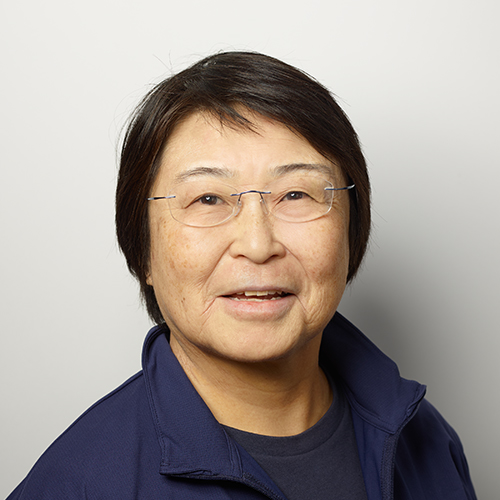
Professor of International Studies
Dr. Yoshii has been a member of the Albion College faculty since 2004.
She is an expert in international history, with a long record of research and publications in the field. Her current projects include “Maintaining a Facade: Reagan’s Taiwan Policy, 1981–1988” and “World War I’s Pacific Theatre and U.S.–Japan Relations.” She is also a frequent presenter at conferences internationally.
At Albion, Dr. Yoshii teaches a range of courses, including Introduction to International Studies, American Foreign Policy, Power and Culture in the Asia-Pacific, and Journey to Japan.
Education
- Ph.D., 2003, Boston University
- Doctorate Certificate, International Relations, 1993, Tsuda University, Tokyo
- M.A. History, 1991, Boston University, MA, USA
- M.A. International Relations, 1988, Tsuda University, Tokyo
- B.A. International Relations ,1986, Tsuda University, Tokyo
Courses
- INTN 130: Intro to International Studies
- INTN 189: Journey to Japan
- JAPN 189: Journey to Japan
- INTN 235: American Foreign Policy
- PLSC 235: American Foreign Policy
- HIST 310: Power/Culture in Asia-Pacific
Publications
- Currently working on two projects: “Maintaining a Facade: Reagan’s Taiwan Policy, 1981-1988” and “World
War I’s Pacific Theatre and U.S.-Japan Relations” - “The Reischauer Offensive: A Scholar-Ambassador’s Challenge to Japanese Leftist Historians, 1961-66,”
The Journal of American-East Asian Relations, 31 (2024), 195-219. - Chapter 20, “The United States, Japan, Korea and the Pacific since 1961” in The Society for Historians of
American Foreign Relations, The SHAFR Guide: An Annotated Bibliography of U.S. Foreign
Relations since 1600 (Brill, 2017). A 88-page long annotated bibliography of U.S. foreign relations
with Japan, Korea, Australia, and New Zealand including primary sources, biographies,
historiographies, and secondary works. - “The U.S. Stance toward the 1962 Sino-Japanese Trade Agreement,” Crossroads: Studies on the History of
Exchange Relations in the East Asian World, Vol. 10 (October 2014), 123-154.
This paper examines the Kennedy administration’s policy toward Japan’s approach to Beijing.
Rusk’s preoccupation with the Cold War and lack of a grasp of East Asian conditions led him to
believe that the agreement was Japan’s first step toward recognizing Beijing. In contrast, the
department’s East Asian specialists, particularly Ambassador Edwin O. Reischauer, had a better
comprehension of the Sino-Japanese relations as an expert of East Asian history. This paper
provides not only the complex layers of the U.S. policy makers’ intentions, but also a fresh look at
the historical relations between Beijing and Tōkyō a decade before China’s mending of relations
with the U.S. and Japan. - “Reducing the American Burden? U.S. Mediation between South Korea and Japan, 1961-1965,”The
Japanese Journal of American Studies, vol. 20 (2009), 47-65. Winner of the Saito Makoto Award.This paper highlights the stark difference between the Northeast Asian policies of Kennedy and
Johnson. In light of a downward trend in U.S. balance of payments, the Kennedy administration
hoped to reduce U.S. economic and military aid to Korea by encouraging normalization between
South Korea and Japan. The policy’s main goal was to have Seoul use the Japanese reparation
money for its economic development. Johnson continued encouraging normalization during his
presidency, but his aid guarantee to Korea in order to secure Korea’s troop support in Vietnam
undermined Kennedy’s intent to reduce the U.S. economic burden. This article won the Saito
Makoto Award from the Japanese Association of American Studies in June 2010. - “The Creation of the ‘Shock’ Myth: Japan’s Reactions to American Rapprochement with China, 1971-1972”
The Journal of American-East Asian Relations, vol. 15 (2008), 131-146.
This paper reassesses the convention that President Nixon’s 1971 announcement to visit China came
as a shock to Japan. Using the diaries and memoirs of Prime Minister Sato, his aide, and other
contemporaries of the era, I conclude that the so-called Nixon Shock was a myth created by the
media, policy makers, and scholars from both Japan and the U.S. Emphasizing Tokyo’s efforts to
open trade relations with China throughout the 1950s and 1960s, I argue that the U.S.-China
rapprochement actually became a catalyst for the speedy conclusion of Japan’s own normalization
with China, releasing Japan from the constraint of U.S. Cold War policy. This article suggests that
Japan’s China policy, which has often been placed in the backseat of U.S. diplomacy, contained
relatively more independence from the U.S. than previously thought and thus brings a new
perspective to historical studies of US-China-Japan triangular relations. - “The United States Navy’s Plan to Dispatch a Fleet to Singapore and its Potential to Deter Japan, 1937-1941”
Journal of Okazaki College of Foreign Studies, 4: 1997, 131-156.
This study examines the British-American discussion to send a U.S. fleet to British Singapore and
American concerns over long supply lines. The paper argues that the plan had potential to deter
Japanese occupation of French Indochina, thus avoiding the Pacific War from happening. - “The Experiences of Three Issei Women in California during World War II: A Study of Oral History”
Journal of Okazaki College of Foreign Studies, 3: 1996, 129-154.
This paper sheds new light on the lives and perceptions of first generation Japanese-American
women, whose communication was limited to Japanese and whose socio-economic status differed
from most other Japanese-Americans who were interned during WWII. - “John F. Kennedy’s China Policy: Liberal or Conservative?” Journal of Okazaki College of Foreign Studies,
1: 1994, 177-196.
This paper analyzes the historiography of JFK’s China policy, providing an overview of
interpretations offered by JFK’s former cabinet members, historians of the baby-boomer generation,
and more recent studies based on newly available materials in both the U.S. and abroad. This article
was cited as one of the notable papers in the “review and outlook” section of Shigaku Zasshi [Journal
of the Historical Society] 103:5 (1994). - “The Role of the American Naval Attaché in Japan, 1939-41: Its Limits in FDR’s Decision-Making Style”
Tsuda College, The Study of the International Relations, 「アメリカ海軍と日本情報、1939-
41年、一駐日アメリカ海軍武官の活動を中心として」『国際関係学研究』別冊 20: 1994, 29-40 (in
Japanese).
This study analyzes the American naval attaché’s intelligence reports regarding Japanese naval and
fighter plane construction plans, and how bureaucracy, personal feuds, and racist views among some
Navy Department officials prevented this information from reaching the White House. - “The Conclusion of the Russo-Japanese Neutrality Pact and the United States,” Politico-Economic History,
「日ソ不可侵条約の締結とアメリカ」『政治経済史学』297: 1991, 14-25 (in Japanese).
This study discusses that the Russo-Japanese treaty of April 1941 encouraged American officials to
notify Moscow of critical intelligence information suggesting an imminent German invasion, thus
prompting the formation of the U.S.-Soviet alliance. - “The Conclusion of the No-Separate-Peace Treaty and Germany’s Declaration of War on the United States,”
The Japan Association of International Relations, International Relations,
「日独伊単独不講和条約の締結とドイツの対米宣戦布告」日本国際政治学会『国際政治』91:1989,
86-100 (in Japanese).
Using Japanese Foreign Ministry archival materials, this paper proves that the conclusion of Adolph
Hitler’s treaty with Japan immediately before Japan’s Pearl Harbor attack influenced his decision to declare war on the United States. It also argues that Hitler’s decision took place sometime between
November 28 and December 3, 1941. - “The German Navy’s Perception of the United States, 1939-1941” Tsuda College, The Study of the
International Relations, 「ドイツ海軍の対米認識、1939-1941年」『国際関係学研究』15: 1988
(Supplement), 73-85 (in Japanese).
Using Fuehrer Conferences on Matters dealing with the German Navy, 1939-1941 (Washington:
Government Printing Office, 1947), this paper revealed Admiral Erich Raeder’s failed efforts to
convince Hitler to declare war on the United States before December 1941.
Awards
- The JAAS 2010 Saito Makoto Award for the Best Journal Article with: “Reducing the American Burden?
U.S. Mediation between South Korea and Japan, 1961-1965,”The Japanese Journal of American Studies,
vol. 20 (2009), 47-65. - Grant, The Great Lakes College Association (GLCA) Expanding Collaboration Initiative, “Bringing East
Asia to the Great Lakes Region: An Inter-generational Cross-Cultural Digital Oral History
Project.” 2014 - GLCA, Endowment of the Japan Study, Travel Grants, 2006, 2012.
- The NEH Seminar grant, “The Mongols and the Eurasian Nexus of Global History,” East-West center,
Honolulu, May 26-June 27, 2014 - Asian Studies Development Program (ASDP) Grant, Institute of Infusing China and Korea into the
Undergraduate Curriculum, East-West Center, Honolulu, July 25-August 12, 2011. - Travel Grant, the Yamasa Institute, 1995
- Yamane Scholarship, 1988
- Japanese Association of University Women Award, 1986