Chasing a cancer cure first step on a career path
Catherine VanderWeg ’26 spent this summer at Wayne State University, just blocks from the Detroit Tigers’ Comerica Park.
Of course, she had to see a game, for the cultural experience.
“It surprised me to find out I love baseball,” VanderWeg said. “I ended up going to a bunch of games and buying jerseys and such. I’ve been watching every game online since and really miss being in Detroit to watch them play in person!”
Baseball wasn’t the only exciting discovery of VanderWeg’s summer studying a potential treatment for non-small cell lung cancer. “My internship went very well,” she reported. “There’s still a lot more work to do, but we found very promising results.”
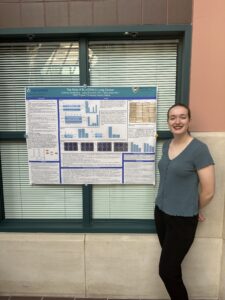
Catherine Vanderweg during her internship at Wayne State University.
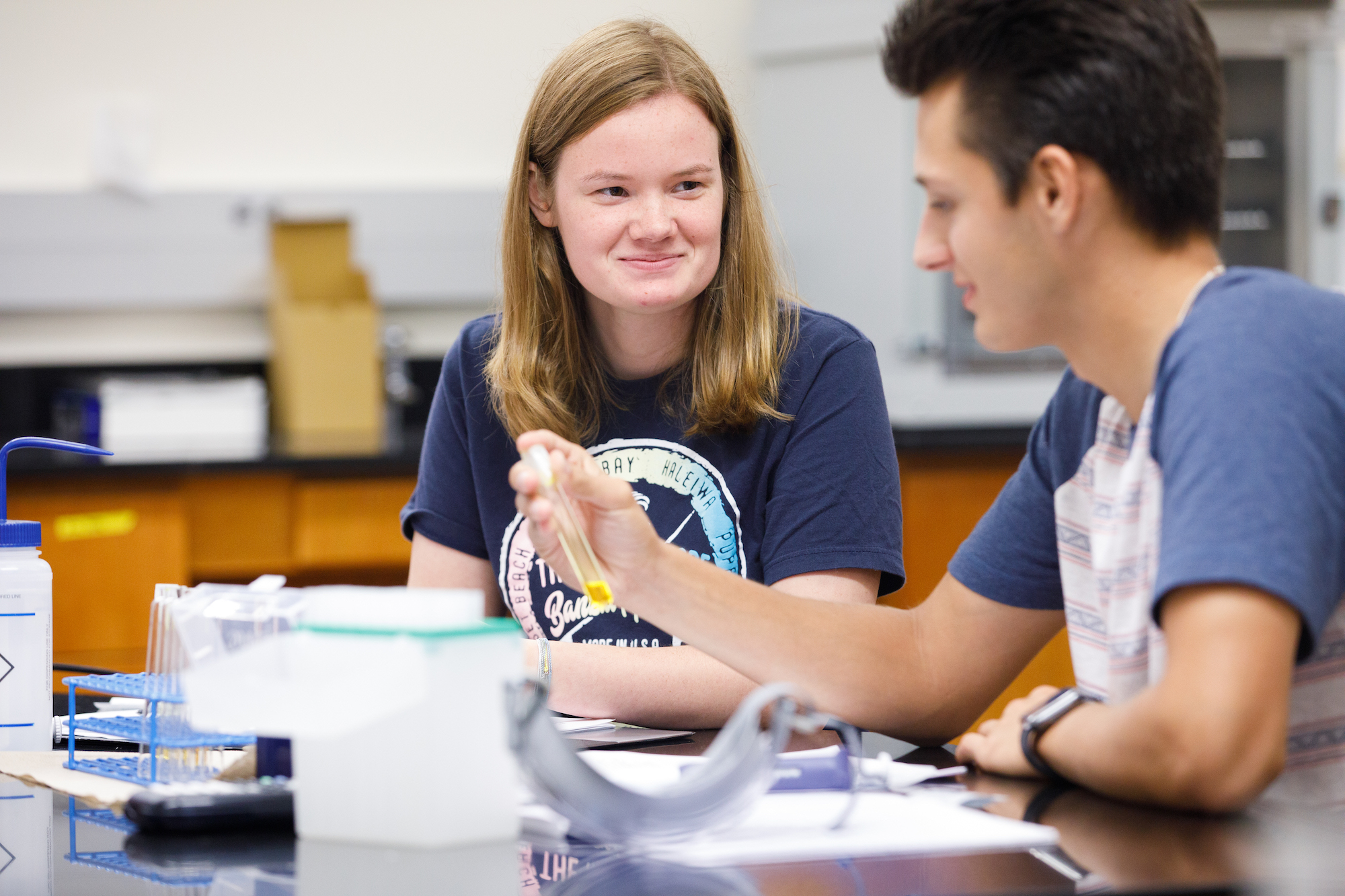
Thanks to a competitive Research Experience for Undergraduates (REU) fellowship from the National Science Foundation, VanderWeg was able to join a Wayne State research lab exploring numerous biochemical aspects of cancer. For her own research project, VanderWeg focused on the enzyme complex BCKDH and its subunit, BCKDHA.
“We’re pretty sure that branch chain amino acids provide fuel for cancer cell growth, and BCKDHA is involved in that,” VanderWeg explained. “If we can decrease the levels of BCKDHA, it prevents those amino acids from being used as fuel.
It’s common that undergraduate research projects don’t get anywhere near completion. In VanderWeg’s case, preliminary findings showed that “lung cancer cells with a decrease in BCKDHA grew less than lung cancer cells with an increase in BCKDHA, which was what we thought would happen,” VanderWeg said. “Non-small cell lung cancer only has a five-year survival rate of 28%. Lowering BCKDHA might be the key to increasing the survival rate. I hope that this work could help find potential targets for treatment.”
REUs are intended to challenge students, and not simply in areas of technical skill-building. “I’m very shy and had to come out of my shell,” VanderWeg said, noting she got a lot more comfortable with asking questions and delivering weekly presentations on her progress.
The self-described perfectionist also got a lot of practice making mistakes. “Learning so many new things, mistakes are bound to happen, and I had to learn not to be upset when they did,” she said. “My lab partner really helped me by telling me I was doing good or making a joke like ‘you should have seen me when I first started, trying to do this.’”
The summer at Wayne State, VanderWeg said, was an extension of the education she looked for and found at Albion. “When touring as a high school student, I found out that all Albion’s biology classes have a link back to human health, and a lot of the time, cancer,” she said. “This definitely influenced my decision when choosing what college to go to. I really admire the cellular and molecular biology courses Albion offers along with the connection all the classes have to human health.”
She continued, “This REU was my first time working full time in a laboratory and I really enjoyed it. I was able to learn and master a lot of new techniques that are going to help me be more competitive as I apply to Ph.D. programs this fall.”
At the end of it all, however, VanderWeg said the biggest lesson she learned might have been more personal than professional.
“When you’re surrounded by people dealing with cancer, it really changes how you view your own problems,” she said. “It’s hard to describe, but it’s like you think things are hard in life, but they really aren’t once you see what others are going through, what you could be going through. I really stopped complaining this summer about the little things.”
Catherine VanderWeg is a senior majoring in biology with a concentration in neuroscience. VanderWeg is the child of Renee and David VanderWeg of Portage and is a graduate of Portage Northern High School.